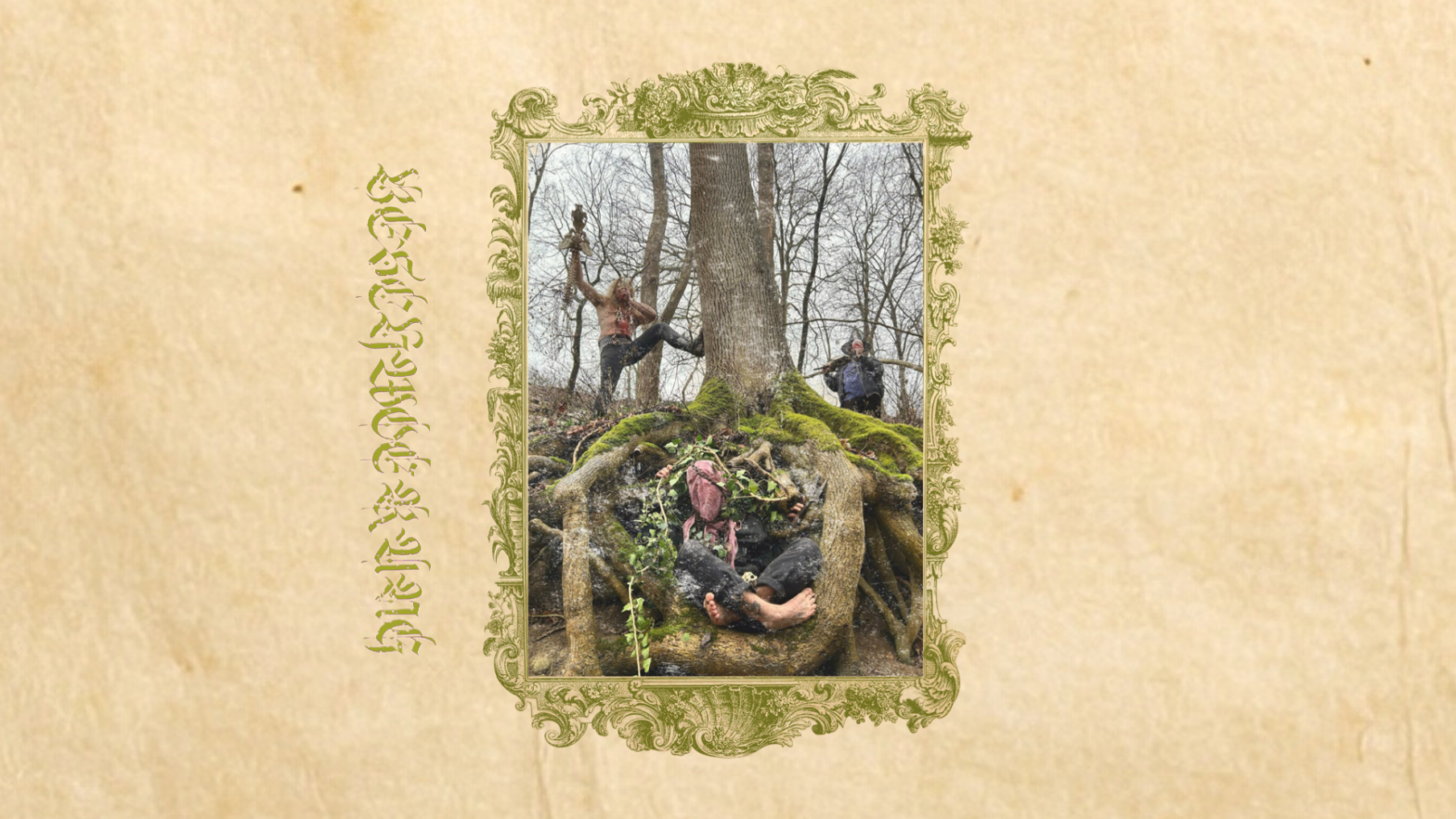
[EN] Beschwörung is a German word (yes, I can already hear your sarcastic “thanks a lot”) meaning, well, quite a lot of things — as German words usually do. It moves and fluctuates within the semantic realms of “evocation”, “enchantment”, and “invocation”. It comes directly from the verb beschwören — “to invoke, to conjure”, but also “to swear, to pronounce an oath”, which recalls the idea of an oath as an invocation of a supernatural force: a spiritual link and chain binding all parties to the vow, guaranteeing the effects, auspicious or ill-fated, brought about by the very act of swearing it.
[IT] Beschwörung è una parola tedesca (grazie tante, direte) che significa, beh, un bel po’ di cose—come di solito accade con le parole tedesche. Si muove e fluttua nei territori semantici di “evocazione”, “incantamento” e “invocazione”. Deriva direttamente dal verbo beschwören—“invocare, evocare”, ma anche “giurare, pronunciare un giuramento”, il che richiama l’idea del giuramento come invocazione di una forza soprannaturale: un legame, una catena spirituale che vincola tutte le parti al voto, garantendo gli effetti, fausti o infausti, prodotti dal semplice atto di pronunciarlo.
My personal favourite translation would be “the act of conjuring”: the art of bringing into this suffering and collapsing world — this speck of dust and matter — something which is, if not wholly alien to it, still radically other; forced by the very evocation to be on and in this world, while remaining not of the world. Bound and unbound, compelled and yet fundamentally free; as the black metal played by the band, enclosed in the medium’s forms and, still, not wholly described by such forms.
Such a description, indebted as it is to my thrift-store and — let us be perfectly honest — cobbled-together, amateurish knowledge of occultism and esotericism, is nonetheless able to aptly describe what the seemingly young band from Thuringia are doing with their craft: what they are evoking (yes, I went there), what kind of auditory demons and spirits and fairies and entities they are conjuring for the listener’s enjoyment. To conjure is to bind and to unbind; the artist creates, but is also acted upon. The band functions as a vessel for something that demanded to be made; the evocation is finalised in creating something. The band embodies something out of this world and brings it within the sensible space.
Their self-titled album, which came out on the thirteenth of December last year (so, as we Europeans write our dates, on 13.12 — and I refuse to acknowledge such an event as anything other than a numinous and auspicious omen), went unseen and unheard until a few days ago. Then it became very much heard. The spell the trio cast seems to be working — and effectively so. Very few albums have commanded me to listen with such repetition, attention, intention, and yet such reckless and joyous abandon. Only a handful of albums in the past years (five, ten, fifteen, twenty? For how long has this maladaptive adjustment we summarise as “I listen to black metal” been going on?) have managed to capture and utterly mesmerise me as this one has. Once again, black metal rears its ugly head(s) and speaks to us from the heavens and the depths, from dusks and dawns, from the great and honourable to the appalling and shameful, from divinity to bestiality — and once again we have no choice but to let the evocation pull us in. We gladly abide.
The sound the Germans have created is firmly rooted in the more “raw” end of the black metal spectrum, but to simply call them “raw black metal” would be something of a disservice to their ingenuity and creativity. Their sound is richer than such a label suggests, and it ebbs and flows, adding and removing layers of complexity. Change — as with the universe and magical traditions — is the sole constant. Changes in pace, instrumentation, drumming patterns, vocal range and technique, influences and emotional vocabularies are juxtaposed to repetitions of ideas, riffs and sounds. The album reveals a trance architecture: repetition as incantation, variation as revelation. The first drags us in; the second frees us. We headbang and tap our feet and fingers, and then, something unexpected happens, and the feeling is almost cathartic. In the short span of the album, one has the impression of having listened to such a diverse array of ideas and manifestations of what black metal can be that it feels like an intense crash course.
The most immediate point of comparison for such a rich tapestry of sound — at least for us — and especially for their songwriting, lies with two other bands, one gone and one still extant: Urfaust and Fluisteraars. From the former, one senses the drunken mysticism, the ritualistic haze, the sense that the vocalist is evoking something rather than performing a mundane selection of songs. The ritual is in full swing, and nature is high as fuck and rambling with all her children in a frenzied dance. From the latter, there are similarities to be discovered within the pastoral transcendence, the strangely uplifting melancholy, and the sense of movement and narrative in the songwriting. This is not to say that the German band is a copycat or simply moves between those two poles; their voice is definitely their own, and their craft has been honed to be theirs only. It is just an exercise in finding similarities and points of contact within the vast, at times nebulous, networks of modern black metal artistry. It is, mostly, to highlight how different bands – in time, in space, in languages – draw similar waters from the numerous and poisonous wells of black metal, more as materialising a shared sensitivity than simply losing ourselves in the usual games of genealogies (a time-honoured tradition in metal circles).
The band will played live in a social space in Bamberg on the seventh day of February, as part of a bill of like-minded bands (read: not fucking nazi posers). Their music is not overtly political, but this participation is a good sign; and maybe to lose ourselves in a stupefied haze, in a cathartic ritual, on the dust of this planet (cit.) while refusing the artificial and inhumane rationales of state and capital, is a revolutionary act in itself; it may not bring upon the end of exploitation and of the tyranny of the market, but at least it may free us, if for a short span of time. Let your mind wander in the sonic maze Beschwoerung conjured.
Bast666
🎶 Listen to Beschwoerung on Bandcamp. 🎶

- [EN-IT] Beschwoerung – Beschwoerung
- [EN-IT] Der Weg Einer Freiheit – Innern
- [IT] Giù le mani dal Venezuela!

- [IT] Metal Threat festival
- [EN-IT] Weald & Woe – Far from the Light of Heaven: An Epic Journey Between Shadow and Light
La mia traduzione preferita sarebbe “l’atto di evocare”: l’arte di portare in questo mondo sofferente e in rovina—questo granello di polvere e materia—qualcosa che, se non del tutto alieno ad esso, è comunque radicalmente altro; costretto dalla stessa evocazione a essere in e su questo mondo, pur restando non del mondo. Legato e slegato, costretto e tuttavia fondamentalmente libero; come il black metal suonato dalla band, racchiuso nelle forme del medium e, nondimeno, non del tutto esaurito da tali forme.
Una descrizione del genere, per quanto debole e raffazzonata—e, diciamolo senza giri di parole, dilettantesca—nella mia conoscenza di occultismo ed esoterismo da mercatino dell’usato, riesce comunque a descrivere con una certa precisione ciò che la band, apparentemente giovane e proveniente dalla Turingia, sta facendo con la propria arte: ciò che sta evocando, che tipo di demoni, spiriti, fate ed entità sonore sta chiamando a raccolta per il diletto dell’ascoltatore. Evocare significa legare e slegare; l’artista agisce, ma è anche agito. La band funziona come un vaso per qualcosa che ha preteso di essere portato nel mondo; l’evocazione si compie nel creare qualcosa. La band incarna qualcosa che proviene da fuori da questo mondo e lo porta entro lo spazio del sensibile.
Il loro album omonimo, uscito il 13 dicembre dell’anno scorso (quindi, come noi europei scriviamo le date, il 13.12—e mi rifiuto di considerare un tale evento come qualcosa di diverso da un presagio numinoso e fausto), è rimasto invisibile e inascoltato fino a pochi giorni fa. Poi è diventato molto, molto ascoltato. L’incantesimo che il trio ha lanciato sembra funzionare—e funzionare alla grande. Pochissimi album mi hanno costretto ad ascoltarli con tale ripetizione, attenzione, intenzione, e al tempo stesso con un abbandono così sconsiderato e gioioso. Solo una manciata di album negli ultimi anni (cinque, dieci, quindici, venti? Da quanto va avanti questo adattamento disfunzionale che riassumiamo con “ascolto black metal”?) è riuscita a catturarmi e a ipnotizzarmi completamente come ha fatto questo. Ancora una volta, il black metal rialza la sua brutta testa (o le sue brutte teste) e ci parla dai cieli e dagli abissi, dai crepuscoli e dalle albe, dal grande e onorevole al ripugnante e vergognoso, dalla divinità alla bestialità—e ancora una volta non abbiamo altra scelta se non lasciare che l’evocazione ci trascini con sé. Acconsentiamo di buon grado.
Il suono che i tedeschi hanno creato è saldamente radicato nel versante più “raw” dello spettro del black metal, ma limitarci a definirli “raw black metal” sarebbe in qualche modo un torto alla loro inventiva e creatività. Il loro suono è più ricco di quanto un’etichetta del genere lasci intendere, e fluisce, si espande e si ritrae, aggiungendo e togliendo strati di complessità. Il cambiamento—come nell’universo e nelle tradizioni magiche—è l’unica costante. Cambi di ritmo, di strumentazione, di pattern di batteria, di estensione e tecnica vocale, di influenze e vocabolari emotivi, sono giustapposti a ripetizioni di idee, riff, suoni. L’album rivela un’architettura da trance: la ripetizione come incantazione, la variazione come rivelazione. La prima ci rapisce; la seconda ci libera. Scapocciamo, battiamo piedi e dita e poi accade qualcosa di inatteso e la sensazione è quasi catartica. Nel breve arco dell’album, si ha l’impressione di aver ascoltato una tale varietà di idee e manifestazioni di ciò che il black metal può essere, che sembra un corso intensivo.
Il punto di paragone più immediato per un arazzo sonoro così ricco—almeno per noi—e in particolare per la loro scrittura, si trova in due altre band, una scomparsa e una ancora attiva: Urfaust e Fluisteraars. Dai primi si avverte il misticismo ebbro, la foschia rituale, la sensazione che il cantante stia evocando qualcosa, piuttosto che eseguire una banale scaletta di brani. Il rituale è in pieno svolgimento, e la natura è strafatta e vaneggia danzando con tutte le sue creature con frenesia e rapimento. Dai secondi, si ritrovano affinità nella trascendenza pastorale, nella malinconia stranamente ottimista, nel senso di movimento e di narrazione nella scrittura dei brani. Questo non significa che la band tedesca sia una copia, o che si limiti a oscillare tra questi due poli; la loro voce è decisamente la loro voce, e il loro operare è stato affinato per essere soltanto il loro. È solo un esercizio nel trovare somiglianze e punti di contatto all’interno delle vaste, talvolta nebulose, reti del black metal contemporaneo. È, soprattutto, un modo per mettere in luce come band diverse—nel tempo, nello spazio, nelle lingue—attingano ad acque simili dai numerosi e velenosi pozzi del black metal, più come materializzazione di una sensibilità condivisa che come semplice perdersi nei soliti giochi di genealogie (una tradizione antica e onorata nei circoli metal).
La band ha suonato dal vivo in uno spazio sociale a Bamberga il 7 febbraio, come parte di una serata con band affini (leggi: non dei fottuti poser nazisti). La loro musica non è apertamente politica, ma questa partecipazione è un buon segnale; e forse perdersi in una foschia stupefatta, in un rituale catartico, sulla polvere di questo pianeta (cit.) rifiutando al contempo le razionalità artificiali e disumane di stato e capitale, è già di per sé un atto rivoluzionario; non porterà alla fine dello sfruttamento e della tirannia del mercato, ma quantomeno potrà liberarci, anche solo per un breve lasso di tempo. Lascia che la tua mente si perda nel labirinto sonoro che Beschwörung ha evocato.
Bast666
🎶 Ascolta Beschwoerung sul Bandcamp della band. 🎶